
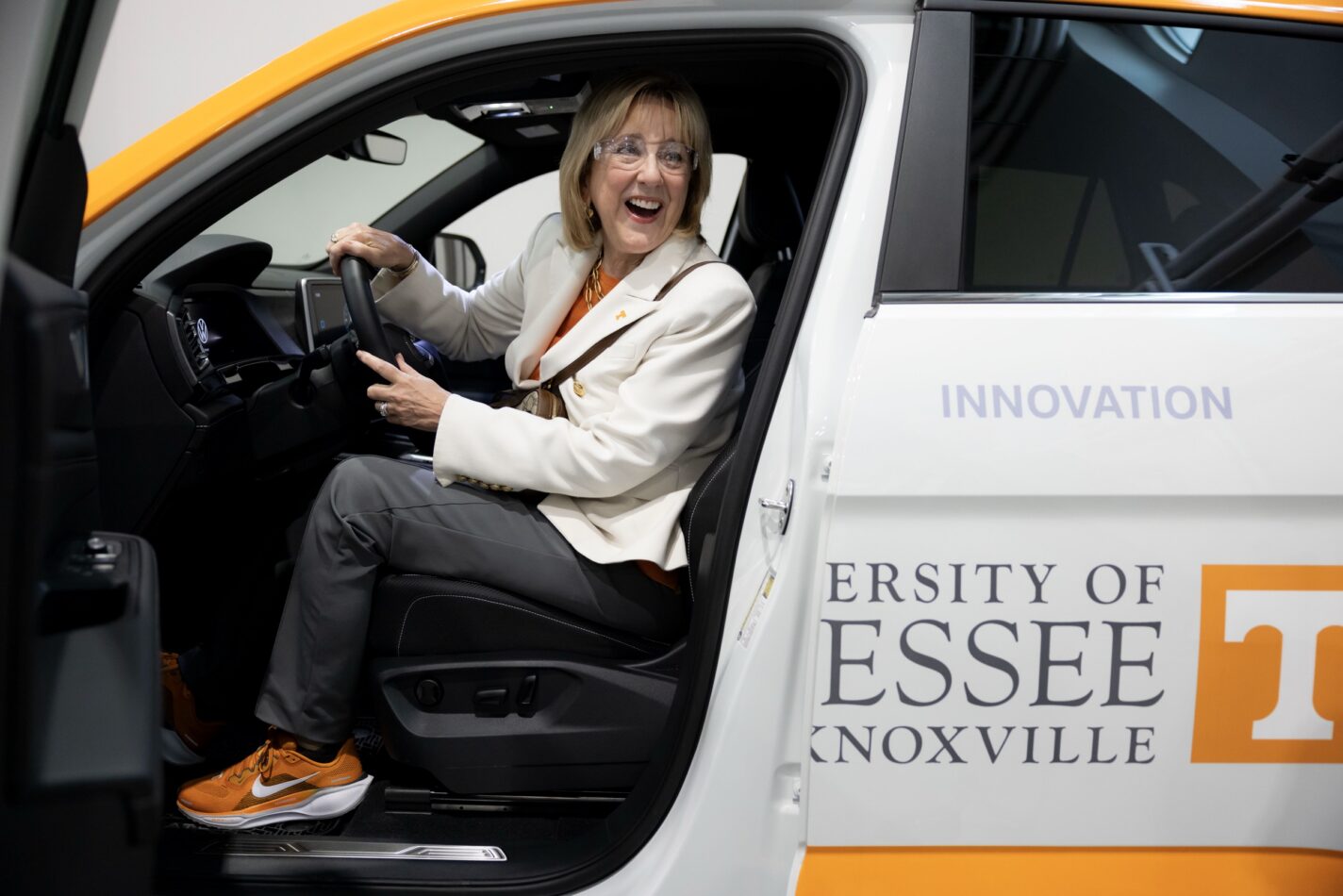
Five years ago, Volkswagen made an innovative choice. Instead of writing a check to a university and waiting for a report, they moved in. VW already had a major manufacturing presence in Chattanooga, but when they built their first North American R&D hub, they chose UT and moved onto the Research Park. Their scientists set up inside UT’s Research Park facilities, across the river from campus and down the hall from faculty
The results show up in products: thirty active research projects, a dozen pending patents, and technology entering manufacturing. A UT lab is now producing interior door handles for VW electric vehicles made from paper pulp. They are lighter, stronger, and cheaper than plastic. This is not research that ends on a conference wall. It ends on a vehicle leaving the factory floor.
Over a decade in advanced mobility showed me how fragile most industry–university collaborations can be. The pattern was familiar. A major announcement. A modest grant. A small research team working on something the company’s product group never encountered. The work would conclude. Reports were written. Then both sides moved on, often without anything entering practice.
The VW–UT model moves against that pattern and points to what partnership can become.
Co-location reshapes the work. When researchers and engineers share a building, problems settle themselves in hallway conversations instead of proposal cycles. Dr. David Harper’s team at UT’s Center for Renewable Carbon was working on natural fiber composites, not door handles. Proximity gives rise to moments no grant structure can script.
The strength of the work lives in the people who shape it. Integration beats transfer. The VW PhD Fellows program embeds doctoral candidates as full-time VW employees while they complete their degrees. They step into the company as contributors, not interns. They are professionals with dual citizenship in academic research and commercial development. When they finish their doctoral work, they work at the boundary where research becomes product.
The university also serves as a connector rather than a contractor. UT brought Volkswagen into conversation with Eastman, the Kingsport-based specialty materials company. That introduction grew into a closed-loop recycling effort that turns automotive shredder residue into new plastic resins. The university is a conduit to Tennessee’s industrial base.
Volkswagen is not alone in working this way. ZEISS built an innovation hub at Karlsruhe Institute of Technology in Germany on the same principles. Max Riedel, who leads that effort and has studied partnerships at BMW, IBM, and Siemens, observes that the later stages of innovation, when ideas begin to take shape as products, “benefit immensely from trust-building facilitated by physical proximity.”
A 2020 study in the Journal of Technology Transfer reached the same conclusion, noting that many university–industry partnerships falter because communication drifts. Co-location makes that drift far less likely. It is difficult to lose touch with someone you meet in the course of a day.
An innovation gateway is the mechanism for turning research into products and students into professionals who can work at the boundary between discovery and deployment.
Tennessee has 900 automotive companies and more than 140,000 people working in the sector. Electrification and autonomy already shape that landscape. Innovation hubs point to a future where the state can move beyond assembly lines and into the work of commercialization.
Volkswagen’s decision to place its innovation hub in Knoxville suggests they see a foundation worth advancing. The model built with UT offers a roadmap for innovators as they choose where to establish their next lab, their next research team, or their next move in the future of mobility.
Take Your Next Step From Mobility Concept to Commercial Path
The Spark Mobility Lab follows the same principles that make embedded industry–university partnerships work. It is a collaboration between the Tennessee Advanced Energy Business Council and the Spark Innovation Center, designed to help early-stage mobility founders build technologies that can move from concept to commercial use. The program combines Techno-Economic Analysis and Life Cycle Assessment training with direct engagement from industry and investors, giving founders a clearer view of both the technical path and the market that governs it.
The workshop series, paired with a live industry panel, connects startups to experts, mentors, and decision makers across Tennessee’s advanced energy ecosystem. It offers a way for founders to test their assumptions, refine their models, and align their work with the needs of manufacturers, suppliers, and mobility partners.
The Spark Mobility Lab reflects Tennessee’s growing focus on transportation innovation and supports companies preparing to compete in a sector shaped by electrification, autonomy, and new materials. The program operates with support from Launch Tennessee.
Applications are open: Apply Here